
| Professor Guan GuiIEEE Fellow,IET Fellow,AAIA Fellow,ACIS Fellow Nanjing University of Posts and Telecommunications, China |
 | Professor Xindong WuIEEE/AAAS Fellow Hefei University of Technology, China Xindong Wu is Director and Professor of the Key Laboratory of Knowledge Engineering with Big Data (sponsored by the Ministry of Education of China), Hefei University of Technology, China. His research interests include big data analytics, data mining and knowledge engineering. He received his Bachelor's and Master's degrees in Computer Science from the Hefei University of Technology, China, and his Ph.D. degree in Artificial Intelligence from the University of Edinburgh, Britain. He is a Fellow of IEEE and the AAAS (American Association for the Advancement of Science). Speech Title: Bidirectional Enhancement between Large Language Models and Knowledge Graphs Abstract:Large language models (LLMs) such as ChatGPT and DeepSeek have demonstrated significant potential across various tasks. However, they still face challenges including hallucination and insufficient coverage of long-tail knowledge. Existing methods address these issues by integrating external knowledge sources like knowledge graphs (KGs), which improve response accuracy and completeness. Nevertheless, such approaches suffer from construction complexity, semantic loss, and unidirectional knowledge flow. To overcome these limitations, we propose a bidirectional enhancement framework that not only uses KGs to improve LLM generation but also leverages LLM inferences to enrich the KGs, establishing a cyclic feedback loop that continuously optimizes system performance. Based on this framework, we develop the Bidirectional Enhancement with a Knowledge Ocean (BEKO) system, which demonstrates significant improvements over traditional methods in relational reasoning tasks, validating the effectiveness of our approach. |
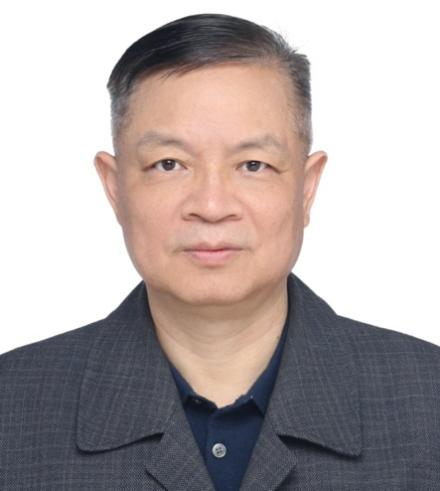 | Professor Ying TanPeking University, China Tan Ying, a native of Yingshan, Sichuan Province, PhD in Engineering. He is currently a Professor and Doctoral Supervisor at Peking University, the inventor of the Fireworks Algorithm (FWA), a Member of the National Academy of Artificial Intelligence (NAAI), and an AAIS Fellow, electee of the 100-Talents Program of the Chinese Academy of Sciences in 2005. His previous academic appointments include Professor at Kyushu University (Japan), Senior Research Scientist at Columbia University (USA), Professor at the University of Science and Technology of China, Research Fellow at the Chinese University of Hong Kong, Professor, Doctoral Supervisor, and Director of the Institute of Intelligent Systems at Electronic Engineering University. His core research interests cover intelligent science, computational intelligence and swarm intelligence, machine learning, big data mining and analytics, as well as their applications in information security, Fintech and related fields. He has presided over more than 30 national-level scientific research projects. He has authored over 20 academic monographs, including Fireworks Algorithm (published by Springer), GPU-based Parallel Implementation of Swarm Intelligence Algorithms (Morgan Kaufmann – Elsevier), and Introduction to Fireworks Algorithm (Science Press). He has also edited 80+ volumes of Springer-Nature LNCS conference proceedings as an Editor-in-Chief. He has published over 450 academic papers and received more than 10 Natural Science Awards at national, Ministry of Education and Beijing municipal levels. He holds over 12 authorized international and national invention patents, together with numerous Best Paper Awards. He serves as Editor-in-Chief, Associate Editor and Editorial Board Member for more than a dozen international journals. He founded and chairs the International Conference on Swarm Intelligence (ICSI), and has acted as General Chair for over 50 international conferences and symposia. He serves as President of the International Society for Swarm and Evolutionary Intelligence, and acts as a review panel expert for multiple international and national science foundations and award programs. Speech Title: The Progress of Fireworks Algorithm (FWA) & Its Applications Abstract:Inspired from the collectivebehaviors of many swarm-based creatures in nature or socialphenomena, swarm intelligence (SI) has been received attention and studied extensively, gradually becomes a class of efficiently intelligent optimization methods.Inspired by fireworks’ explosion in air,the so-called fireworks algorithm (FWA) was proposed in 2010.Since then, many improvements and beyond were proposed to increase the efficiency of FWA dramatically, furthermore, a variety of successful applications were reported to enrich the studies of FWA considerably. Inthistalk, the novel swarm intelligence algorithm, i.e., fireworks algorithm, is briefly introducedand reviewed, thenseveraleffectiveimprovedalgorithms arehighlighted,individually. In addition,the multi-objective fireworks algorithm and the graphic processing unit (GPU) basedFWAare alsobrieflypresented, particularly the GPU-basedFWA is able to speed up the optimizationprocess extremely. Extensive experiments onbenchmark functions demonstrate that the improvedalgorithms significantly increase the accuracy of found solutions, yet decrease the running timesharply.Finally, several typical applications ofFWA, in particular, for big-dataapplication, are presented in detail.
|
