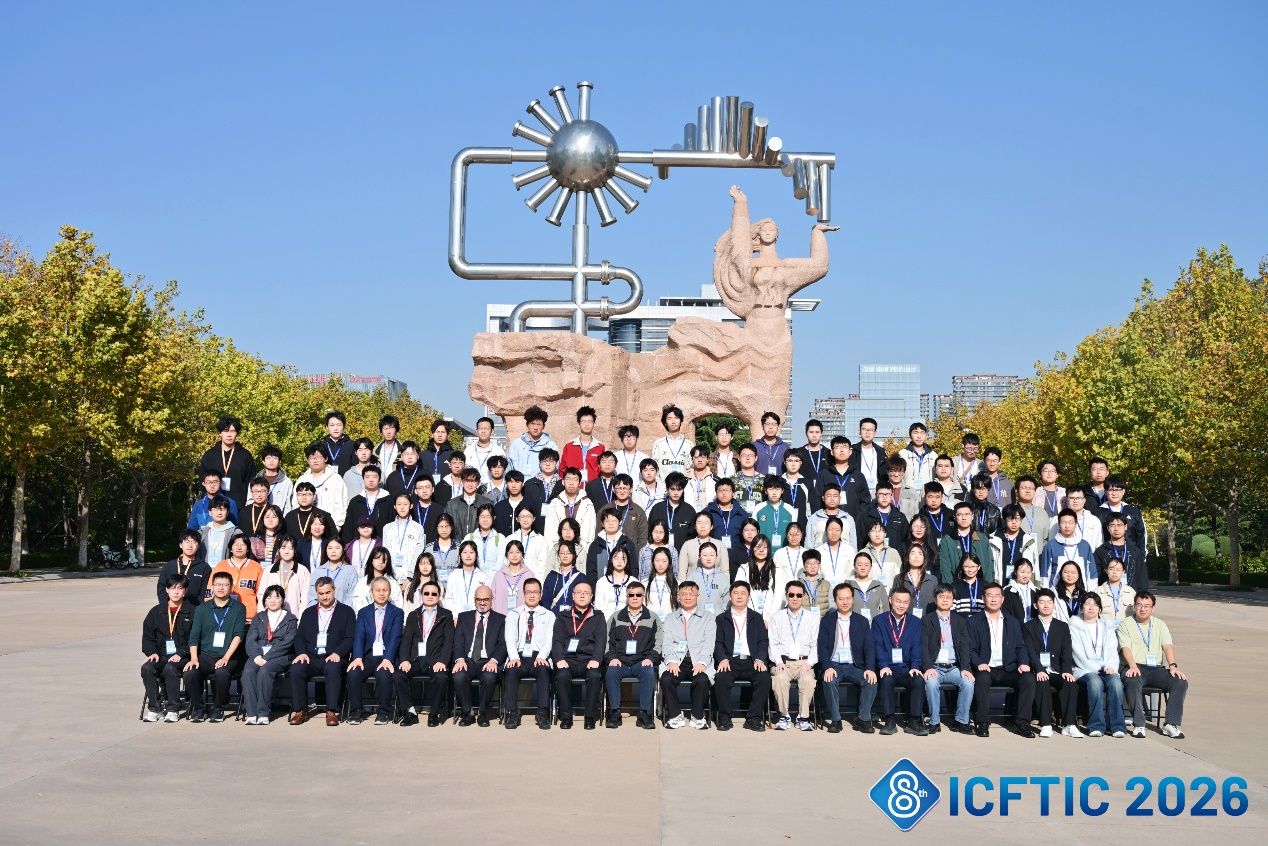
The 8th International Conference on Frontier Technologies of Information and Computer (ICFTIC 2026) was successfully held in Qingdao, China, from October 30 to November 1, 2026. About 300 experts, scholars, and young students from universities, research institutes, and enterprises attended the conference onsite, while nearly 100 participants joined online. The conference focused on frontier directions including artificial intelligence, intelligent computing, big data analytics, next-generation networks, cybersecurity, cloud-edge computing, the Internet of Things, and intelligent signal processing.
Opening Ceremony
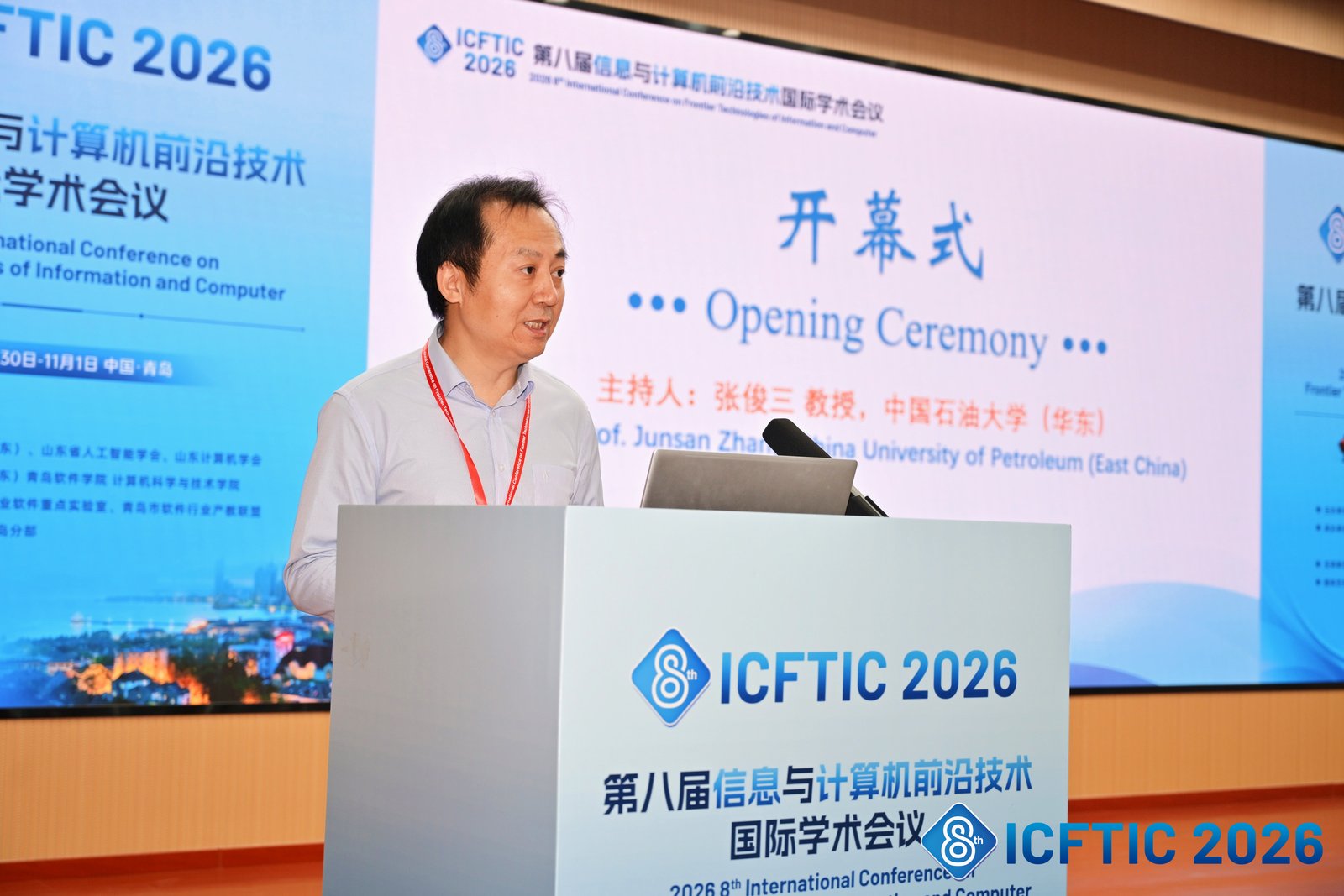
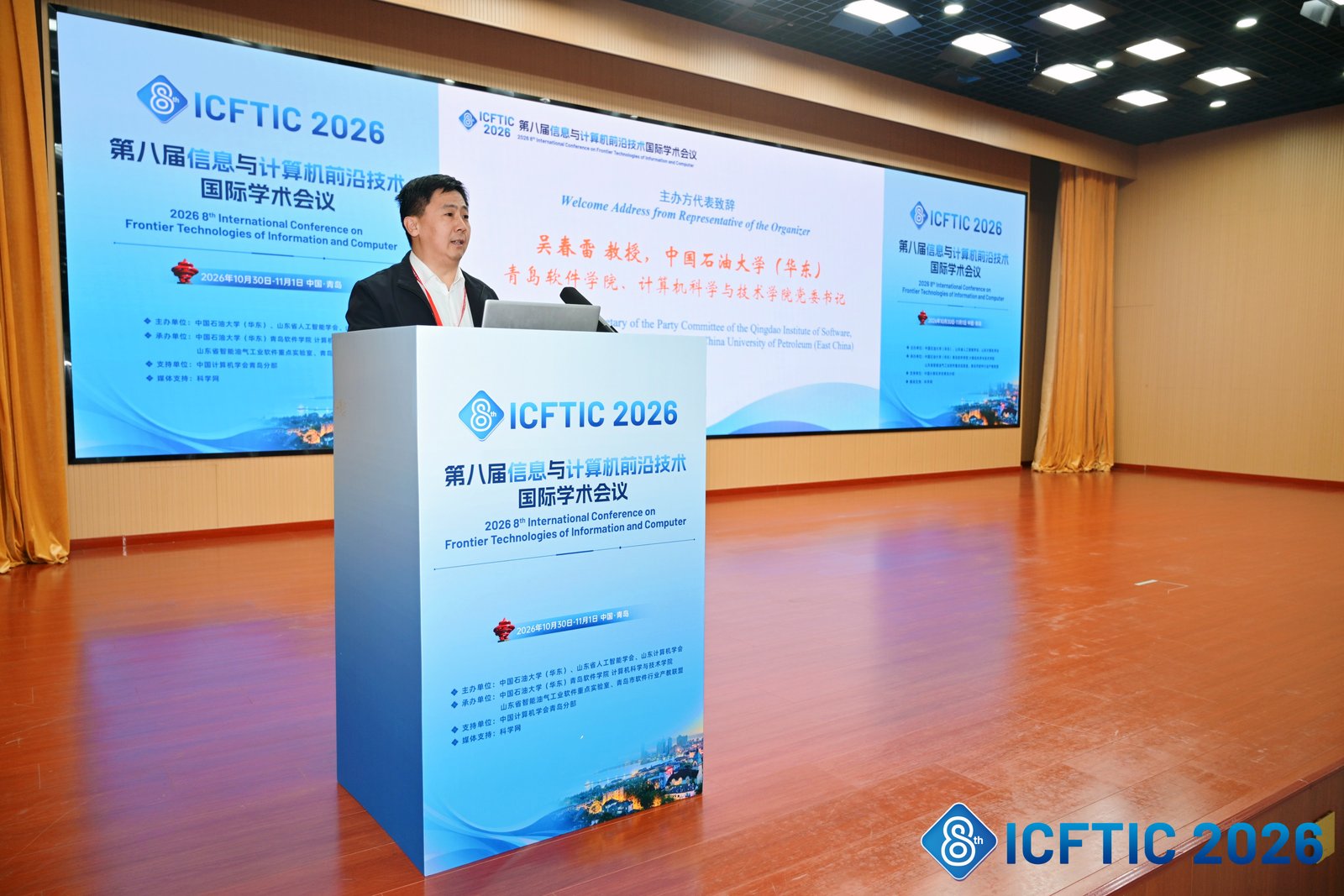
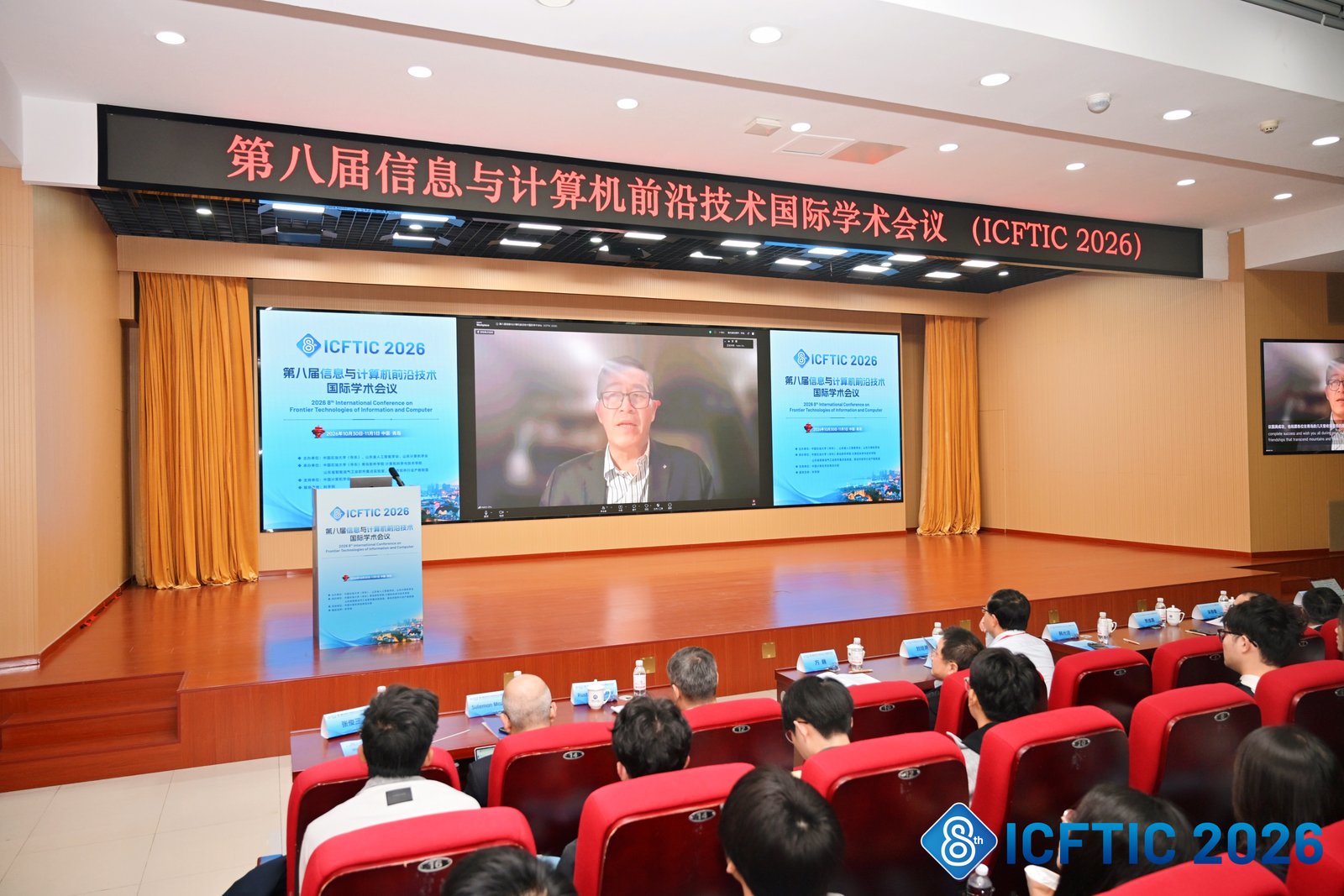
On the morning of October 31, the opening ceremony was held in Yifu Hall, Yifu Conference Center, China University of Petroleum (East China). Prof. Junsan Zhang, Vice Dean of the Qingdao Software College and the School of Computer Science and Technology, presided over the opening ceremony. Prof. Chunlei Wu, Party Secretary of the School, attended and delivered a welcome speech. He warmly welcomed the experts and scholars who came from afar, introduced the university and the recent achievements of the school, and emphasized the importance of international academic exchanges in promoting technological innovation and industrial upgrading. Prof. Haibin Zhu, IEEE Fellow from Nipissing University, Canada, and Chair of the Technical Program Committee, delivered a speech. He briefly reviewed the overall conference arrangements, expressed gratitude to the organizers for their meticulous preparation and strong efforts to ensure the smooth hosting of the conference, and extended heartfelt thanks to all participants for their hard work and significant contributions.
|
|
|
Prof. Junsan Zhang presiding over the opening ceremony | Prof. Chunlei Wu delivering a speech | Prof. Haibin Zhu delivering a speech |
Keynote Speeches
The keynote sessions formed the core of the conference, with five renowned scholars sharing their latest research achievements. Prof. Guangjie Han, IEEE Fellow from Hohai University, gave a presentation titled “Underwater Multi-Agent Embodied Intelligence Networks: Research Progress and Perspectives.” He reviewed advances in embodied perception, efficient embodied learning, scalable embodied decision-making, networked embodied coordination, and robust embodied control for underwater multi-agent systems, and discussed the integration of networks and intelligence for underwater collective embodied intelligence. Prof. Guan Gui, IEEE Fellow from Nanjing University of Posts and Telecommunications, presented “Foundation Models for Radio-Frequency UAV Recognition,” introducing recent progress in LLM-empowered RF UAV recognition, including RF representation learning, signal-semantic alignment, few-shot adaptation, open-set recognition, and knowledge-enhanced reasoning. Prof. Weijia Jia, IEEE Fellow from Beijing Normal University/BNBU, Zhuhai, delivered a talk titled “Open-Loop Agent Tabular QA,” introducing a multi-agent framework for open-domain tabular question answering that detects ambiguities, clarifies them through dialogue, and refines answers through a hierarchical understand-plan-execute architecture. Prof. Ying Tan from Peking University, inventor of the Fireworks Algorithm, presented “The Progress of Fireworks Algorithm (FWA) & Its Applications,” reviewing improvements to FWA, multi-objective FWA, GPU-based parallel FWA, and typical applications in big data and other fields. Prof. Chunlei Wu from China University of Petroleum (East China) gave a presentation titled “Frontier Progress of Large Language Model Technologies and Research on Empowering Oil and Gas Exploration and Development,” reviewing international frontier advances in large language models and discussing the construction of domain knowledge bases, exploration-and-development agents, and the application paths of RAG and GraphRAG in the oil and gas industry.
|
|
|
|
|
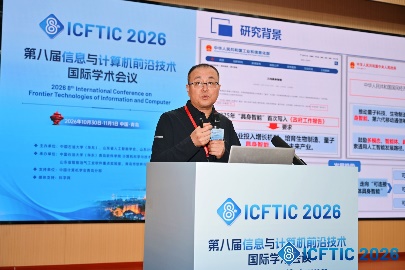
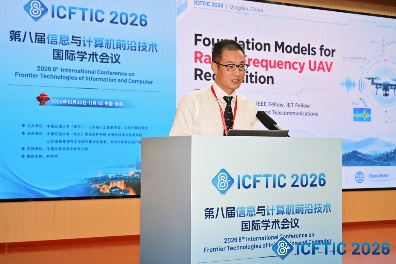
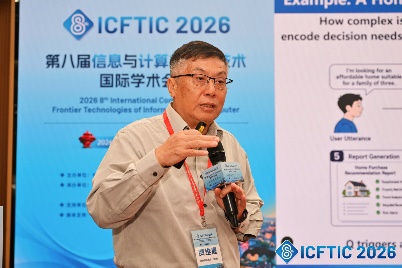
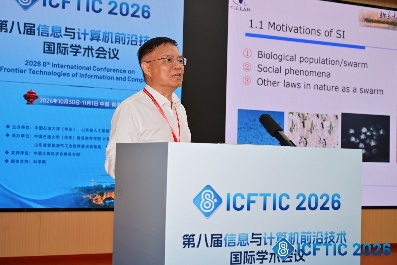

Keynote speech session
Special Forum on Intelligent Industrial Software
In the afternoon of October 31, the conference held three parallel sessions. Session 1 was the Special Forum on Intelligent Industrial Software. Assoc. Prof. Kun Li, Assoc. Prof. Xiaohui Sun, and Lecturer Botao Jiao from China University of Petroleum (East China), Expert Jiguo Du from BGP Inc., China National Petroleum Corporation, and Prof. Xiaoping Lu from COSMO Plat delivered special session speeches. Their topics covered the application of artificial intelligence in oil and gas geophysical inversion, intelligent warning and decision-making for drilling downhole anomalies, learning from data streams under concept drift, the intelligent evolution path and prospects of GeoEast as a large-scale domestic industrial software for oil and gas exploration, and systems and technologies for mass personalized customization in new-generation intelligent manufacturing. The forum demonstrated the frontier trends and practical achievements of the deep integration of artificial intelligence and industrial software.
|
|
|
|
|
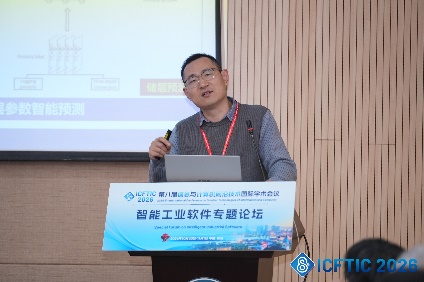
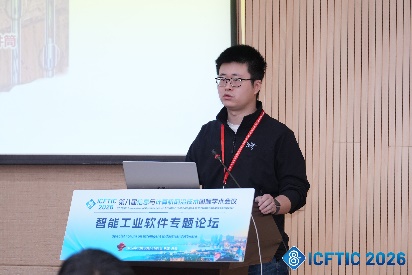

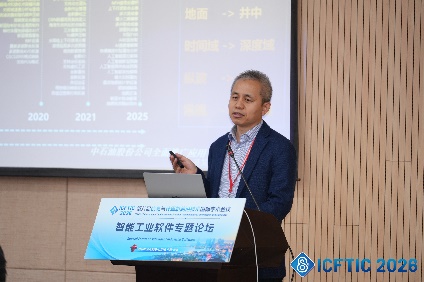
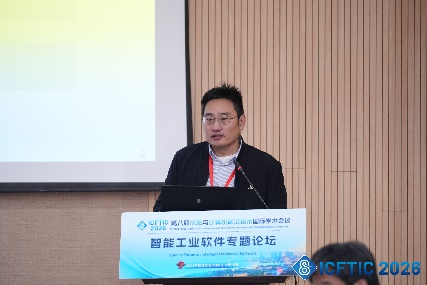
Special Forum on Intelligent Industrial Software
Invited and Oral Presentations
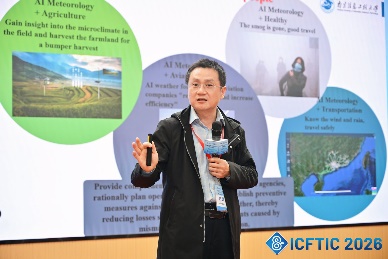
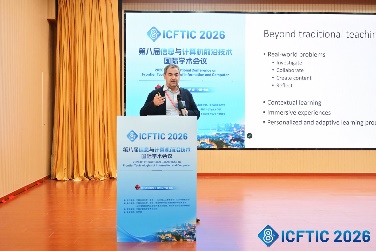
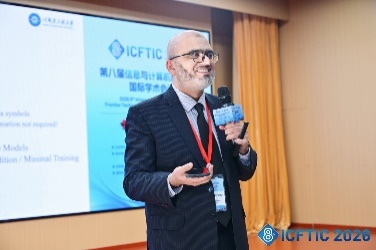
Session 2 featured invited speeches and onsite oral presentations. Prof. Rustam Shadiev from Zhejiang University, Prof. Suleman Mazhar from Harbin Engineering University, and Prof. Wei Fang from Nanjing University of Information Science and Technology delivered invited speeches titled “Connecting Cultures through Technology: Mobile Learning, Virtual Reality, and Generative AI in International Education,” “Data-driven and learning-based approaches for underwater acoustic communication,” and “AI Applications in Meteorological Research,” respectively. They discussed mobile learning, virtual reality, and generative AI for international education; data-driven and learning-based approaches for underwater acoustic communication; and the latest applications of AI in meteorological research. Subsequently, seven young scholars presented onsite oral reports on topics including dynamic heterogeneous graph neural networks, aerial image object detection, robust image watermarking, occupancy-constrained window attention in pillar-based 3D detection, pavement damage detection, rotary position embedding via DNA strand displacement, and few-shot cross-domain video anomaly detection.
|
|  |
|  | 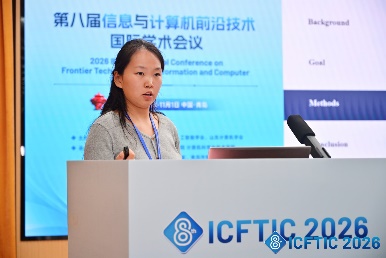 | 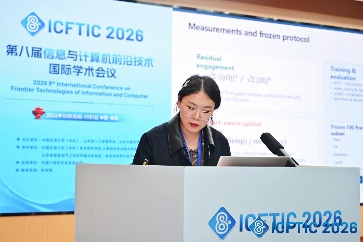 | 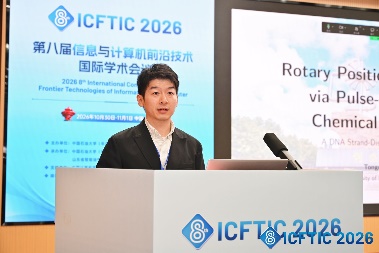 | 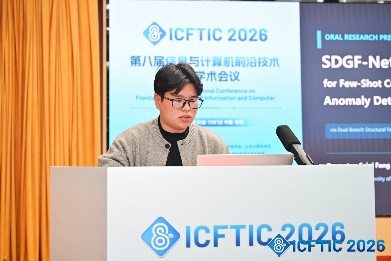 |  |
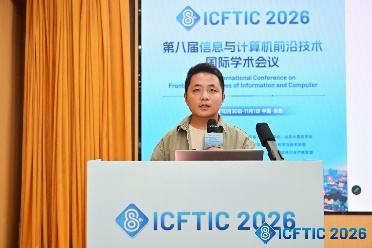
Invited and oral presentation session
Closing Ceremony
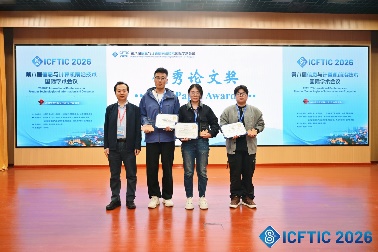
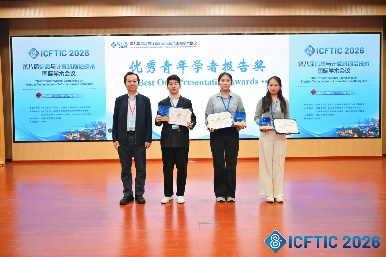
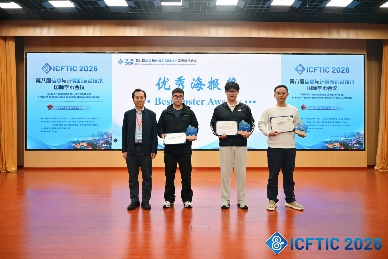
The conference also arranged a poster display and selection session, providing participants with a richer form of academic exchange. During the closing ceremony, Prof. Junsan Zhang summarized the conference and reviewed the fruitful achievements of ICFTIC 2026. The organizing committee presented awards to papers with rich theoretical research and innovative application breakthroughs, to young scholars with excellent oral presentations, and to posters with novel methods, clear processes, and sufficient experimental results. Through recognizing outstanding research talents and achievements, the conference encouraged more scholars to continue exploring the frontiers of information and computer technologies and to make greater contributions to the development of academia and industry.
|
|
|
Best paper awards | Best oral presentation awards | Best poster awards |